Understanding our items

Every piece here carries centuries behind it — an apparition, a promise, a saint who asked for it to be made. Here is what each one means.

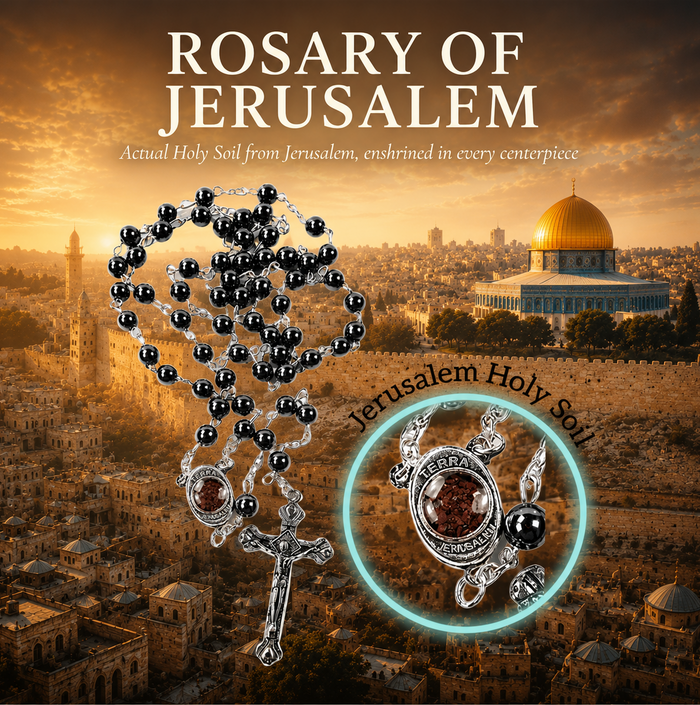
Rosary of Jerusalem

The Holy Land

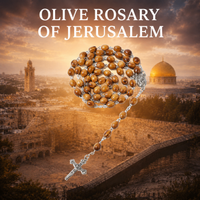
The Rosary of Jerusalem

For two thousand years, Christians have travelled to walk where Christ walked. Most never will. The journey costs thousands, takes weeks, and asks for health that not everyone has.

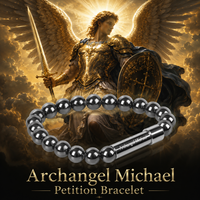
This was made for everyone else. Sealed inside the centrepiece medallion is real soil from the Holy Land — not in the beads, but in the medal at its heart, where your thumb rests when you begin.

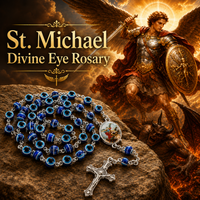
The beads themselves are hematite: dark, metallic, heavy in the hand. Weighted enough that you feel each one pass, which is the whole point. A rosary is a prayer counted with the body, not just the mind.

You were never going to make the pilgrimage. You can still hold the ground.

See the Rosary of Jerusalem
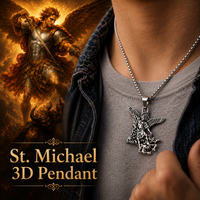
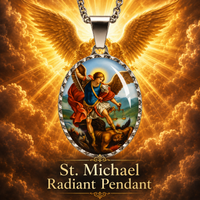
St. Michael Pendant

Prince of the heavenly host

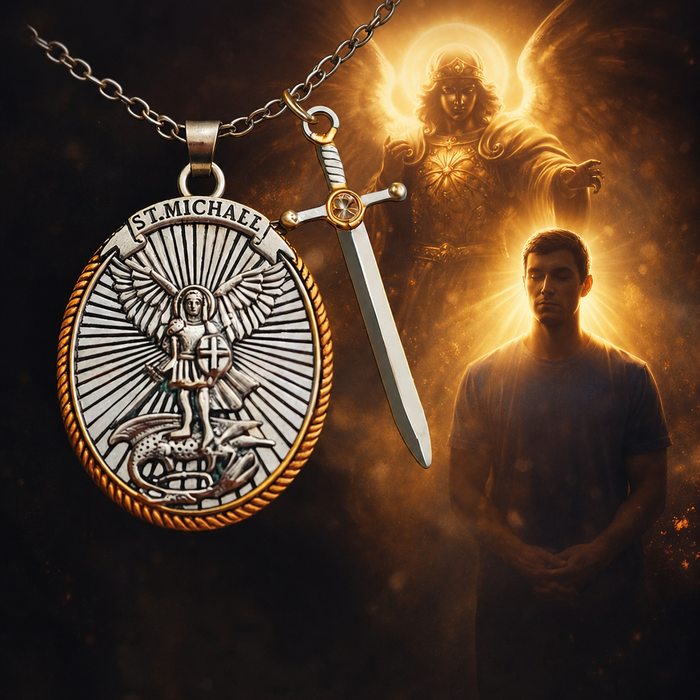
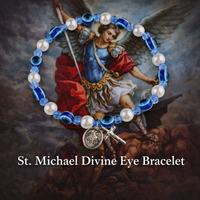
Saint Michael

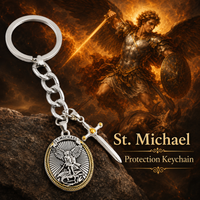
Scripture records a war in heaven. Michael and his angels fought the dragon, and the dragon was thrown down. He is not a saint who lived and died — he is an archangel, and he commands the armies of heaven.

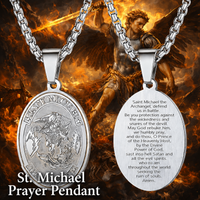
In 1886, Pope Leo XIII composed the prayer still said after Mass in parishes across the world: Saint Michael the Archangel, defend us in battle. Soldiers have carried his name into war. Police carry it still.

The medal shows the moment itself — wings spread, spear driving down, the enemy pinned beneath his heel. On the reverse, Ephesians 6:10, facing the one who wears it.

No charm and no luck. The grace is God’s. The medal keeps the asking close.

See the St. Michael Pendant
Seal of the Seven Archangels

Those who stand before God

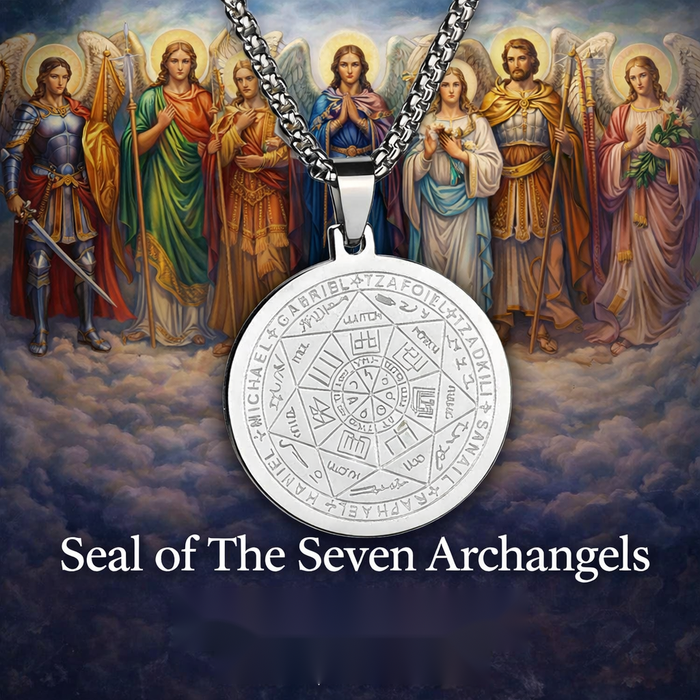
The Seal of the Seven Archangels

Scripture speaks of seven who stand in the presence of God. Raphael names himself as one of them in the Book of Tobit; the Book of Revelation describes seven angels before the throne.

Three are named in Scripture — Michael, Gabriel, Raphael. The remaining names come to us through older Christian tradition, and were carried for centuries in the art of the Eastern and Western Church alike.

This piece gathers all seven into one seal. It is not a talisman and holds no power in itself. It is a way of asking — as the Church has always asked the angels to carry our prayers, the way Raphael told Tobit he had carried his.

Seven names, one request, worn close.

See the Seal of the Seven Archangels
St. Raphael Healing Pendant

The Book of Tobit

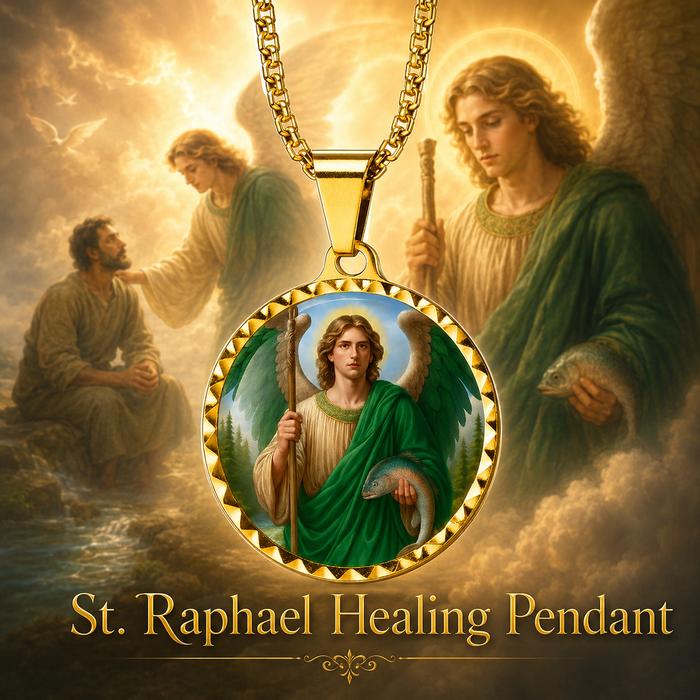
Saint Raphael

His name means God heals. In the Book of Tobit he walks beside a young man for an entire journey, disguised as a fellow traveller, and only at the end reveals who he is: one of the seven who stand before the glory of the Lord.

He had been sent because two people had prayed — an old man going blind, and a young woman in despair. Neither knew the other existed. Raphael was the answer to both prayers at once.

He is asked for in illness, in travel, and by those looking for the person they are meant to marry. All three come from that one book.

He walked the whole road with them before either knew who he was.

See the St. Raphael Pendant
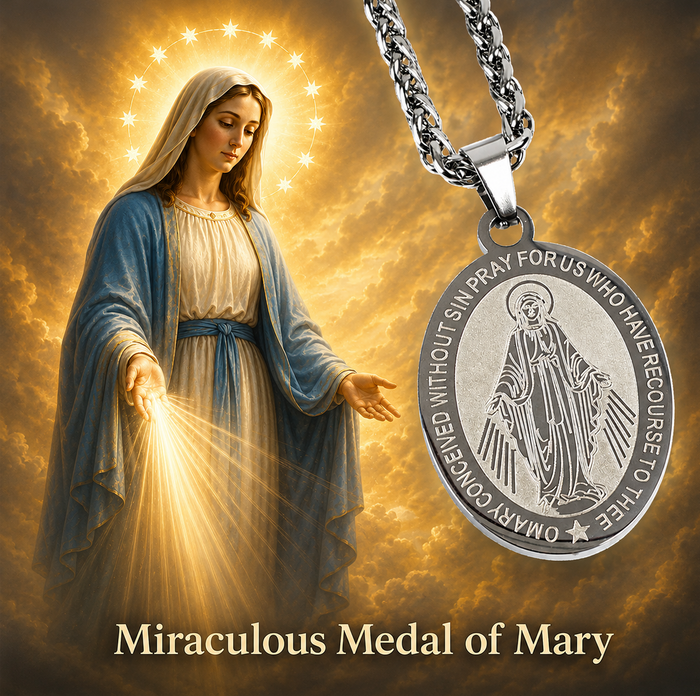
Miraculous Medal of Mary

Rue du Bac, Paris, 1830

The Miraculous Medal

A young novice named Catherine Labouré was woken in the night and led to the chapel. There she saw Our Lady standing on a globe, rays of light streaming from her hands, framed by the words: O Mary, conceived without sin, pray for us who have recourse to thee.

Our Lady asked that a medal be struck to this design, and said that those who wear it would receive great graces. Catherine told no one but her confessor. The first medals were made two years later.

Every detail was specified in that vision — the globe beneath her feet, the twelve stars, the two hearts on the reverse, and the rays, which represent the graces she asked God to give.

Struck to the design she gave, and unchanged since.

See the Miraculous Medal
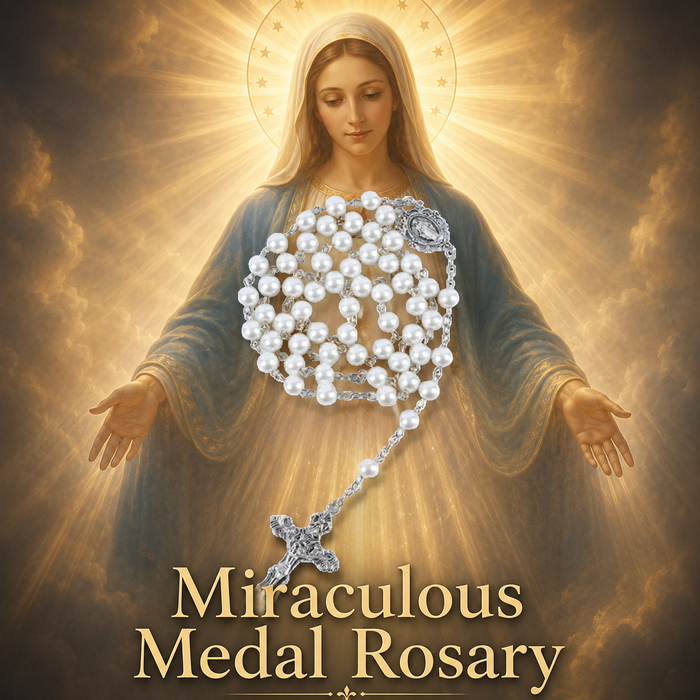
Miraculous Medal Rosary

The medal, at the centre

The Miraculous Medal Rosary

A rosary has a centrepiece — the join where the loop meets the crucifix, and the point your fingers return to at the start of every decade. Most carry a plain link. This one carries her medal.

It means the design Our Lady gave at Rue du Bac sits at the heart of the prayer she asked for. You hold it before the first Hail Mary, and again before the last.

The beads are pearl white, the colour the Church has always used for purity and for feasts of Our Lady.

Her medal, at the centre of her prayer.

See the Miraculous Medal Rosary
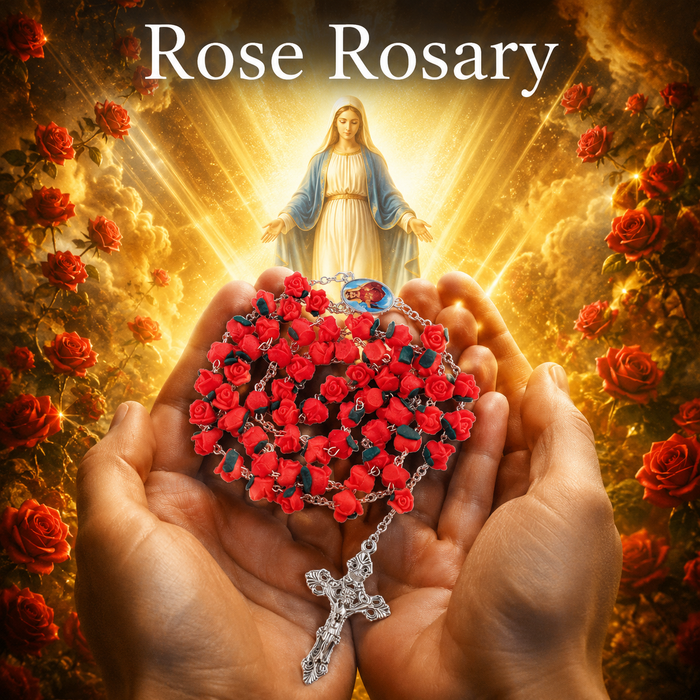
The Rose Rosary

Lourdes, 1858

The Rose Rosary

A fourteen-year-old girl gathering firewood at a grotto saw a lady in white, with a golden rose resting on each bare foot. Bernadette Soubirous did not know who she was. She asked, eighteen times, before the lady answered: I am the Immaculate Conception.

The rose has belonged to Our Lady ever since. It appears in her titles, her litanies, her shrines — the Mystical Rose, the rose without thorns.

Each bead here is shaped as a rose, so the flower passes through your fingers as you pray. It is not decoration. It is the same offering the faithful have brought to her altars for centuries, made into something you can carry.

A rose in the hand for every Hail Mary said.

See the Rose Rosary
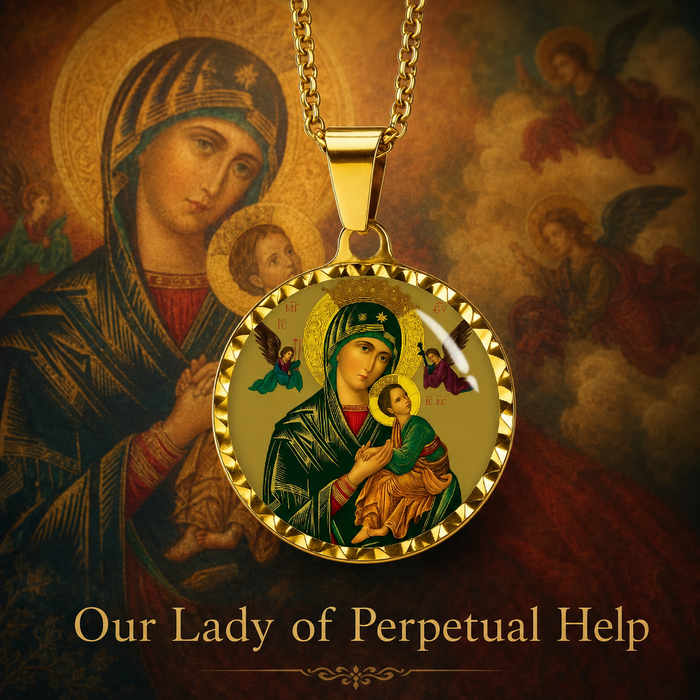
Our Lady Of Perpetual Help Pendant

An icon that crossed the sea

Our Lady of Perpetual Help

The original is a Byzantine icon, painted on wood, carried from Crete to Rome in 1499. It hung in a church that was later destroyed, and the image was lost for decades before Pius IX restored it in 1866 with a single instruction: make her known to the world.

Look at the child. He is not gazing at his mother — he is looking past her, at the archangels Michael and Gabriel, who hold the instruments of his Passion. He has seen what is coming.

One sandal hangs loose from his foot. He has turned to her in fear, and her hands do not clutch him. They present him.

She is holding the one who knows what lies ahead.

See the Perpetual Help Pendant
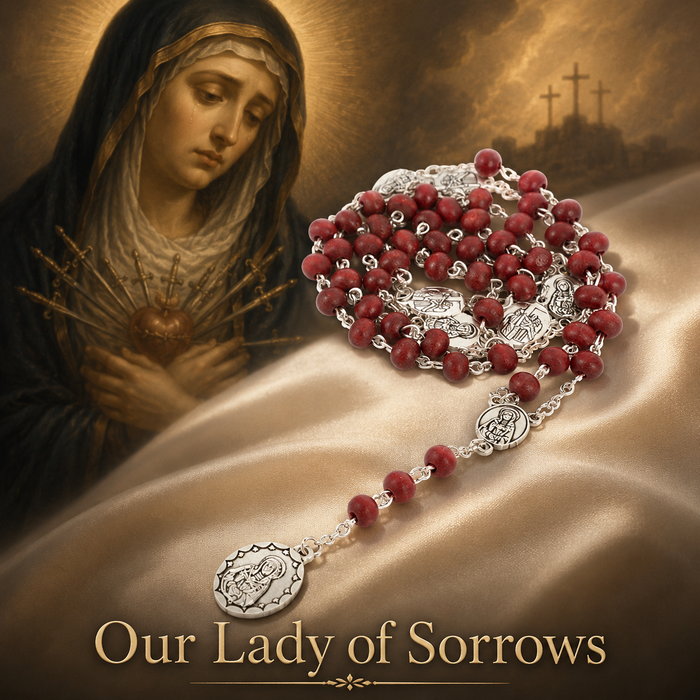
Our Lady of Sorrows Rosary

Seven swords

Our Lady of Sorrows

When Mary presented the infant Christ in the Temple, the old man Simeon blessed her and then said something no mother wants to hear: a sword shall pierce your own soul too.

The Church counts seven such swords across her life — that prophecy, the flight into Egypt, the three days her son was lost, meeting him on the road to Calvary, standing at the cross, receiving his body, and laying him in the tomb.

This rosary is prayed on those seven. It is not the joyful mysteries. It is the devotion people reach for when they are carrying something heavy, because it goes to the one who watched and could not stop it.

For the griefs there is no fixing — only company.

See the Our Lady of Sorrows Rosary
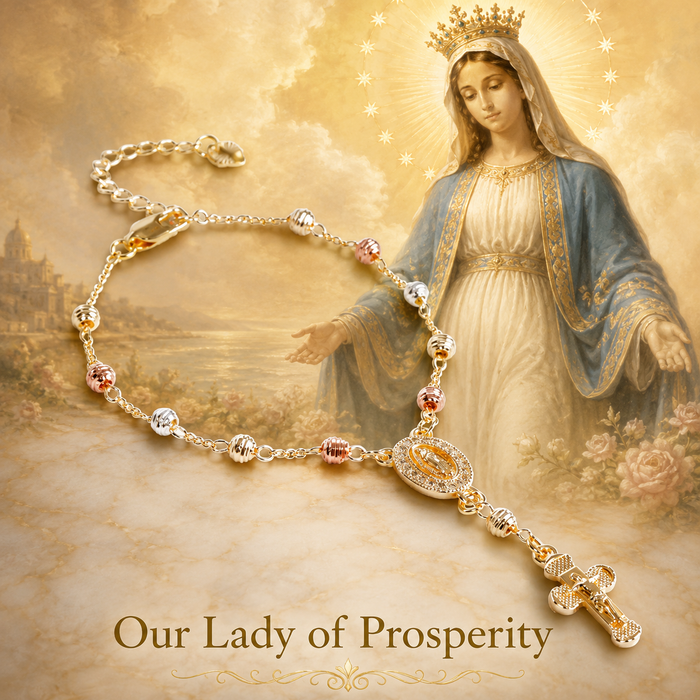
Our Lady of Prosperity Bracelet

Give us this day

Our Lady of Prosperity

At Cana, the wine ran out and nobody told the host. Mary noticed, and she went to her son. She did not perform the miracle. She saw the need and she brought it to him.

That is what this devotion asks of her. Not wealth, and not a bargain — the Church has never taught that any object brings money. It is the same thing Christ told us to ask for in the Our Father: give us this day our daily bread.

Worn on the wrist for the household, the work, the bills that come due — the ordinary needs people are often ashamed to pray about.

She noticed at Cana before anyone asked.

See the Our Lady of Prosperity Bracelet
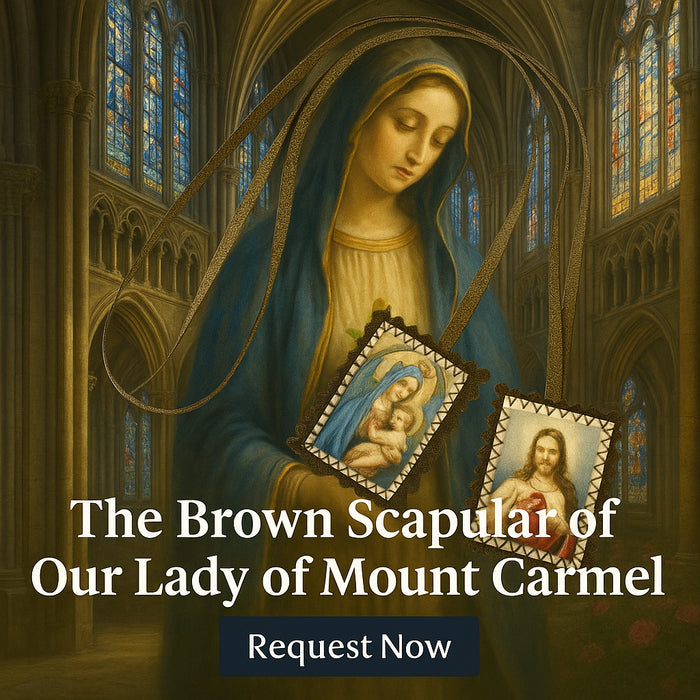
The Brown Scapular

Our Lady of Mount Carmel

The Brown Scapular

Carmelite tradition holds that in 1251, Our Lady appeared to St. Simon Stock holding a brown habit, and gave it as a sign of her protection to those who wear it faithfully.

What the Church teaches is precise, and worth knowing: the scapular is not a guarantee and never was. It is a sign of consecration — an outward mark that you have placed yourself under her care, and a daily reminder to live as though you have.

It is worn a particular way. One panel of wool rests on the chest, the other on the back, joined by cords over the shoulders. Never both in front. Worn like this, it is a small habit — the Carmelite order, carried under your clothes.

Not a promise you wear. A promise you make.

See the Brown Scapular
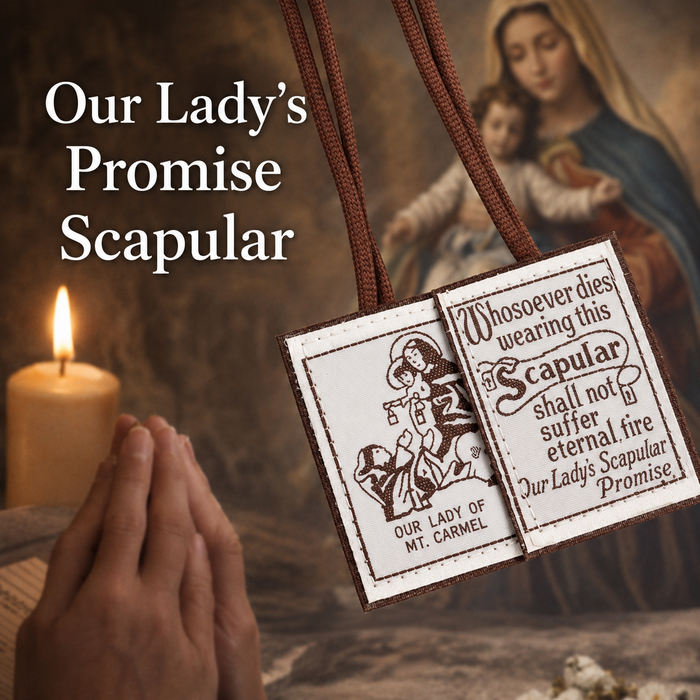
Our Lady's Promise Scapular

The older pattern

Our Lady’s Promise Scapular

The same devotion as the Brown Scapular, made in the traditional Carmelite form — the pattern religious have worn for centuries, before it was made small enough to hide under a collar.

Larger wool panels, printed with her image on one side and the Sacred Heart on the other. It sits heavier and hangs longer, which is the point: a habit is meant to be felt.

It carries the same requirement as any scapular. It must be worn correctly — one panel front, one behind — and it asks the same thing of you: that you live as someone under her care.

The form the Carmelites have worn since the beginning.

See Our Lady’s Promise Scapular
The Green Scapular

For the ones who have drifted

The Green Scapular

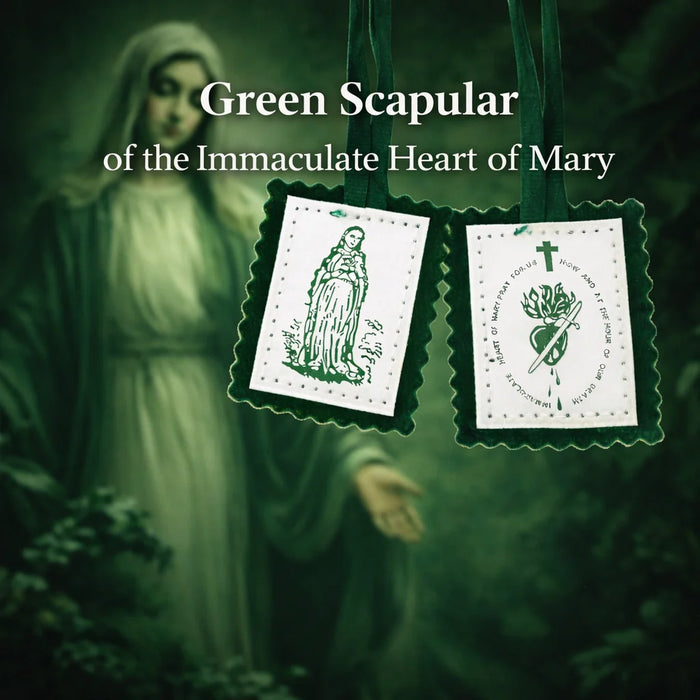
In 1840, Our Lady appeared to Sister Justine Bisqueyburu holding a scapular of green cloth. On one side, her image. On the other, her heart pierced by a sword, and the prayer: Immaculate Heart of Mary, pray for us now and at the hour of our death.

What sets it apart is who it is for. The Brown Scapular is worn by the one consecrated. The Green Scapular is most often given — to someone who has stopped praying, someone gravely ill, someone you cannot reach with words.

It need not be worn to be given. It can be placed quietly among their things. What is asked of you is that you say the prayer for them.

You carry the prayer. They carry the cloth.

See the Green Scapular
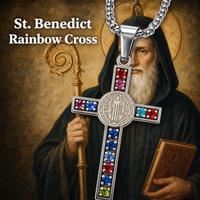
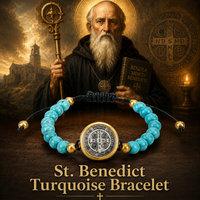
St. Benedict Holy Cross Medal

Monte Cassino, sixth century

Saint Benedict

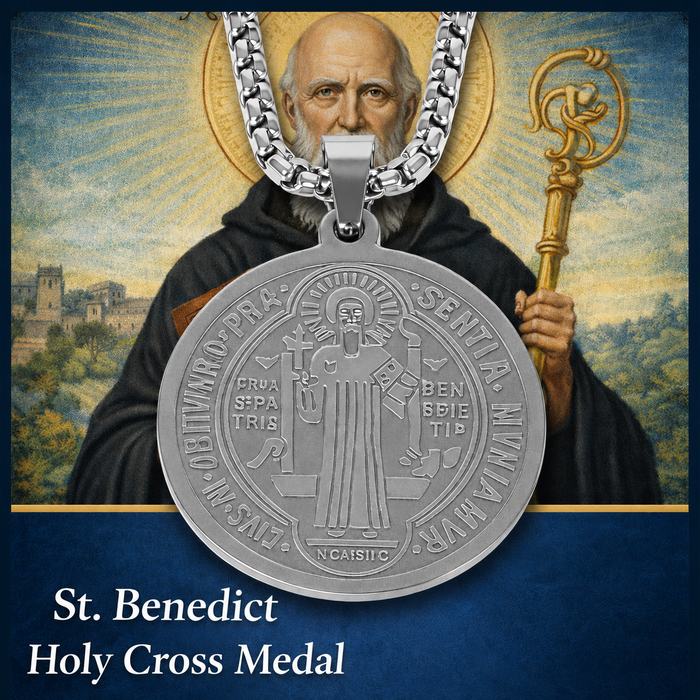
Benedict founded Western monasticism and wrote the Rule that still governs monasteries fifteen centuries later. Twice, tradition holds, men tried to poison him. Both times he blessed the cup and it shattered.

The medal is covered in letters, and each one begins a Latin word. Around the cross: Crux Sacra Sit Mihi Lux — may the holy cross be my light. Around the edge: Vade Retro Satana — step back, Satan.

It is a prayer against evil compressed into metal. The Church has used this medal in her blessings for centuries, and the design has stood unchanged since it was fixed at Monte Cassino in 1880.

A prayer you cannot read at a glance, said continually all the same.

See the St. Benedict Medal
The Lord's Prayer Necklace

Matthew 6

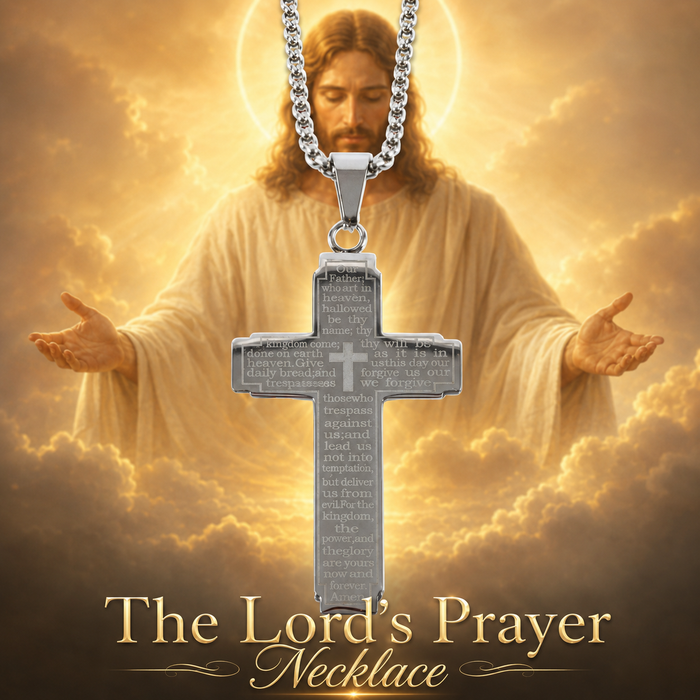
The Lord’s Prayer Necklace

The disciples asked him one question about prayer: teach us how. Everything else in Christian devotion was built afterwards, by the Church, over centuries. This is the only prayer Christ gave in his own words.

It is short enough to say in twenty seconds and deep enough that saints have written whole books on a single line of it. Tertullian called it a summary of the entire Gospel.

Here it is engraved onto a single pendant — small enough that you have to bring it close to read. Which is, in a sense, correct. It was never meant to be shouted.

The words he answered with, kept where you can reach them.

See the Lord’s Prayer Necklace
Last Supper Box

The night before

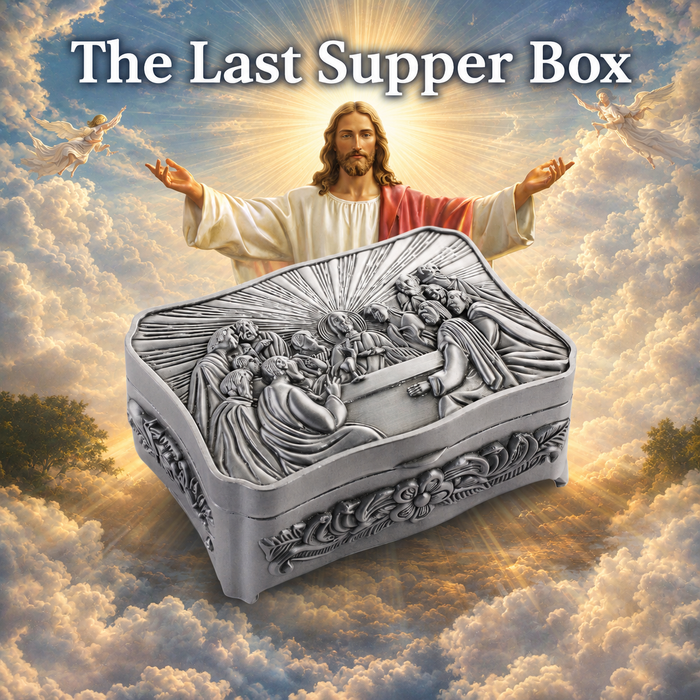
The Last Supper Box

On the night he was betrayed, Christ took bread, broke it, and told them to do this in memory of him. Every Mass since has been that same meal.

The scene on the lid is the one Leonardo painted in Milan in the 1490s — the moment he says that one of them will betray him, and twelve faces react at once. It is the most reproduced image in Christian art, and it is a picture of an ordinary table where something extraordinary is happening.

The box itself is a keepsake. A rosary lives in it, or a medal, or a scapular between wearings — the things that end up loose in a drawer otherwise.

Somewhere for the small holy things to live.

See the Last Supper Box

Every piece, in one place.

Browse everything